
Industrial Filtration Equipment Upgrade: Stainless Steel Special-Shaped Profile Screens Become Mainstream Choice
Release time:
2026-08-03
Industrial Filtration Equipment Upgrade: Stainless Steel Special-Shaped Profile Screens Become Mainstream Choice
Driven by both tightening environmental standards and increasing demands for precision in industrial production, industrial filtration equipment is undergoing a significant upgrade period. Traditional carbon steel screens, with their poor corrosion resistance and short service life, can no longer meet modern industry's requirements for filtration efficiency and equipment reliability. Stainless steel special-shaped profile screens, with their excellent corrosion resistance, customizable structural forms and extended service life, are becoming the mainstream choice for industrial filtration equipment.
Profile Structure Design Breaks Through Traditional Filtration Bottlenecks
The core advantage of stainless steel special-shaped profiles lies in their unique cross-sectional shape design. Compared to traditional round wire and flat plate perforated structures, triangular cross-section wedge wire screens achieve significant technical breakthroughs.
Wedge wire screens adopt a V-shaped slot structure that is narrow on the outside and wide on the inside. As water passes through, it creates a diffusion effect that carries solid particles away once they traverse the opening, effectively preventing particle embedding and clogging. This self-cleaning characteristic maintains stable filtration efficiency during continuous operation, significantly reducing cleaning downtime.
Slotted sieve plates made from trapezoidal cross-section flat bars offer similar anti-clogging advantages. Slot dimensions gradually widen along the direction of water flow, providing higher structural strength at equivalent open area ratios compared to equal-cross-section perforated plate structures, significantly reducing sieve plate deformation risk.
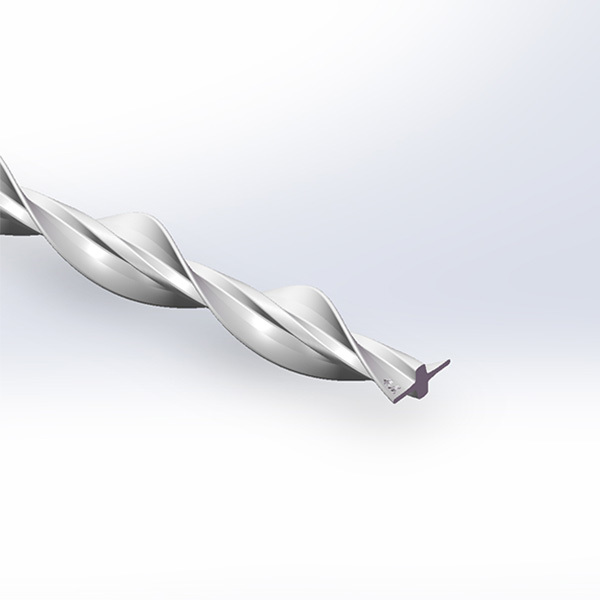
Support rib designs with I-shaped or T-shaped cross-sections can enhance sieve plate rigidity by more than 30% without increasing overall weight, effectively solving deflection and deformation problems under high water pressure conditions and ensuring stable filtration precision during long-term operation.
Diversified Product Forms Cover All Scenario Requirements
For different industrial filtration scenarios, stainless steel special-shaped profile screens have formed a complete product system, covering the entire chain from coarse to precision filtration applications.
Wedge wire screens (wire wrapped screens) serve as core components in deep well water extraction and groundwater filtration systems. Triangular cross-section stainless steel wires welded onto longitudinal support ribs form precise V-shaped slots, with filtration precision customizable between 25 and 800 microns, widely applied in reverse osmosis pretreatment, geothermal well water extraction and agricultural irrigation filtration.
Slotted sieve plates are primarily used in mechanical bar screens, rotary screens, and vibrating screens, with adjustable slot widths from 0.1mm to 3mm for removing suspended matter, fibers and solid particles from liquids, maturely applied in municipal sewage, paper mill wastewater and food processing wastewater treatment.
Arc screens (DSM curve screens) utilize the combined action of centrifugal force and gravity for solid-liquid separation, featuring large processing capacity, no moving parts and simple maintenance, performing excellently in mine tailings classification, coal slurry dewatering and starch processing applications.
Multi-layer stainless steel wire mesh composite filter cartridge products serve reverse osmosis systems, ultrafiltration systems and fine chemical liquid clarification applications, achieving micron-level filtration precision to meet high-purity filtration requirements.
304 and 316L Materials Adapt to Different Operating Conditions
Material selection directly impacts screen service life and filtration effectiveness. Stainless steel special-shaped profile screens primarily utilize 304 and 316L austenitic stainless steels, each suitable for different operating environments.
Grade 304 stainless steel (06Cr19Ni10) suits conventional industrial filtration scenarios, showing good corrosion resistance in neutral to mildly acidic and alkaline environments. In municipal sewage treatment, general industrial circulating water and food and beverage filtration applications, Grade 304 offers the best cost-performance ratio with service life reaching 8 to 10 years.
Grade 316L stainless steel (022Cr17Ni12Mo2), with its molybdenum content, offers significantly superior pitting and crevice corrosion resistance compared to 304. In seawater desalination, coastal power plant circulating water, chemical wastewater treatment and pharmaceutical water applications where chloride ion concentrations are elevated, 316L represents the more reliable choice, with some highly corrosive conditions even employing duplex stainless steel (such as 2205) to further enhance corrosion allowance.
For food, beverage and pharmaceutical industries, profile surfaces must meet food-grade or pharmaceutical-grade standards, with electrolytic polishing treatment achieving surface roughness Ra no greater than 0.4 micrometers, satisfying CIP cleaning and online sterilization requirements while ensuring the sanitary safety of filtration media.
Application Scenario Expansion Drives Market Demand Growth
As emerging industries develop and traditional sectors upgrade, stainless steel special-shaped profile screen applications continue expanding, with market demand showing stable growth trends.
New energy sector: Slurry filtration in lithium battery production, photovoltaic silicon wafer清洗 water treatment, and new energy vehicle battery pack coolant circulation filtration scenarios impose higher requirements on stainless steel screen precision and corrosion resistance.
Semiconductor and electronics: Ultrapure water preparation and process water filtration represent key links in semiconductor production, with demand for high-cleanliness stainless steel filter cartridges and precision screens continuing to increase.
Biomedicine: Pharmaceutical liquid clarification, water for injection filtration and bio-fermentation liquid separation in drug production processes impose extremely strict requirements on filtration equipment material safety and filtration precision.
Marine engineering: In seawater desalination, offshore platform water supply and ship ballast water treatment systems, high-corrosion-resistance stainless steel screens are core components ensuring long-term stable equipment operation.
Mine water treatment: In mine process wastewater treatment and tailings recovery, wear-resistant profile screens combined with surface hardening treatment maintain stable filtration performance in highly abrasive environments.
Manufacturing Process Advances Enhance Product Competitiveness
Manufacturing processes for stainless steel special-shaped profile screens continue advancing, providing technical support for product performance improvement and cost optimization.
Fully automated resistance welding production lines achieve high-speed precise welding of wedge wire and support ribs, with accurate control of welding parameters (current, pressure, time) ensuring weld strength and slot consistency, with single equipment daily output reaching thousands of meters of screen pipe.
Precision cold drawing and polishing processes significantly improve profile surface quality, with surface roughness controlled below Ra0.8 micrometers, not only enhancing filtration efficiency but also strengthening screen self-cleaning capability and corrosion resistance.
The application of laser cutting and CNC bending technologies has significantly improved profile sieve plate machining precision and complex shape realization capability, meeting the demands of non-standard customized filtration equipment.
Selection Recommendations and Market Outlook
For equipment manufacturers and end users, stainless steel special-shaped profile screen selection should focus on: determining material grades based on medium corrosivity (pH value, chloride ion concentration) to avoid under-specification leading to frequent replacement; selecting appropriate profile cross-section forms and slot dimensions based on processing volume and filtration precision requirements; comprehensively considering manufacturing process feasibility and on-site maintenance conditions to choose product solutions with reasonable structure and ease of cleaning and replacement.
Looking ahead, as environmental regulations become increasingly strict and industrial production precision improves, stainless steel special-shaped profile screens' application space in industrial filtration will further expand. The integration of intelligent monitoring technology with filtration equipment will drive screen products toward continued development in high precision, long life and easy maintenance directions, providing solid support for industrial filtration equipment upgrade and replacement.
More news



Contact Us
E-mail:
Wechat:+8613365215016
WhatsApp: +8613365215016
Address:B3-01, Zhangguo Town Science and Technology Park, Xinghua City, Taizhou City, Jiangsu Province
Copyright:Innovate Wirerod (Taizhou) New Materials Co., Ltd.

Message