
Global Market Watch: Stainless Steel Spiral Anchors - Adoption and Spillover Across Countries
Release time:
2026-07-12
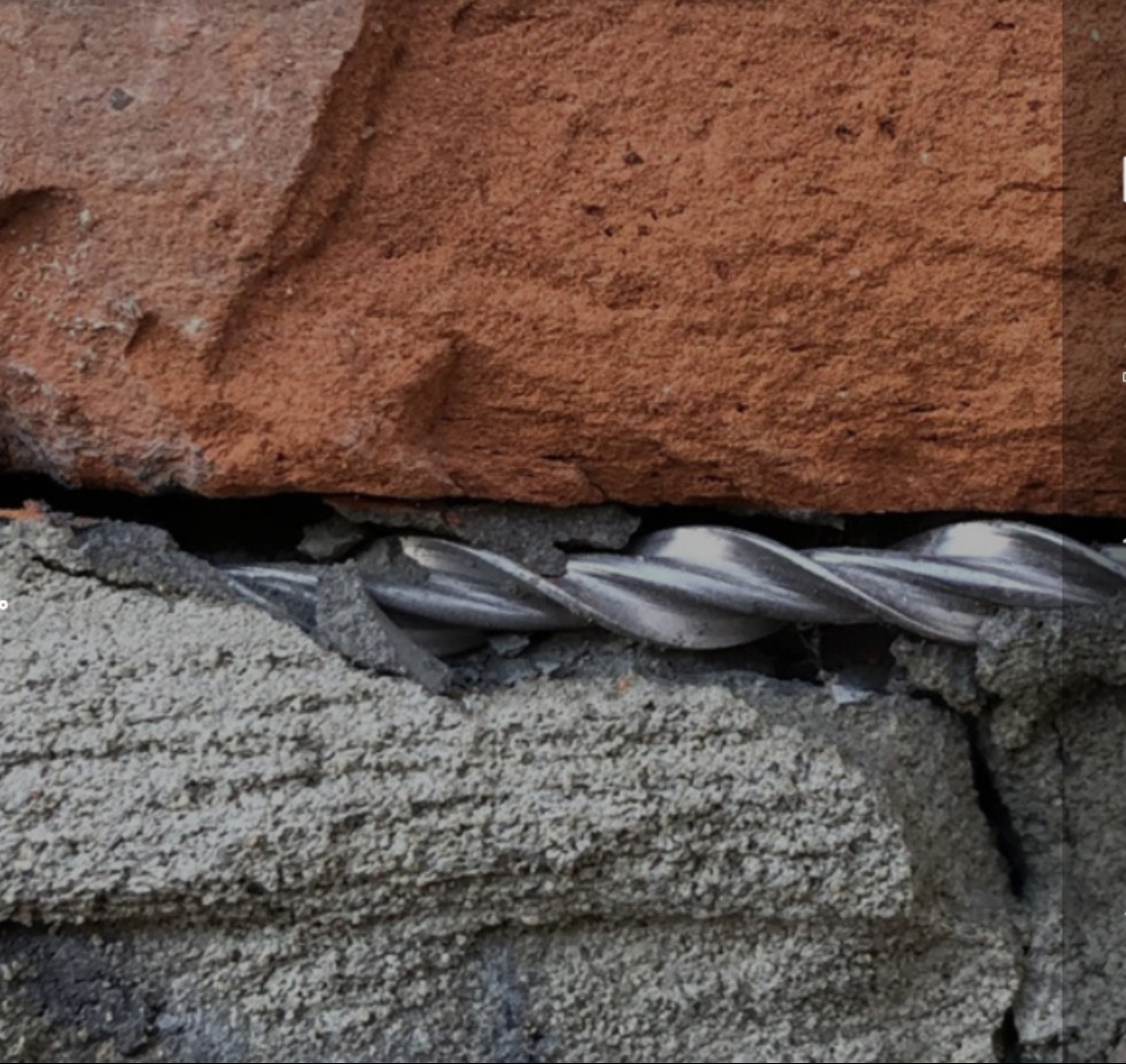
Stainless steel profiled spiral anchors, an emerging minimally invasive reinforcement technology for aging masonry, have achieved large-scale adoption in multiple developed construction repair markets. Their technical characteristics - embedded bonding, shallow mortar joint grooving, and zero damage to original facades - align strongly with urban renewal needs in historic European and Asian towns, gradually transitioning from a niche alternative to a mainstream option. This article reviews the international landscape and spillover effects of this technology.
1. Mass Adoption: Three Leading European Markets
Based on public records and application scale, Europe represents the region with the highest technology penetration. Italy, the United Kingdom, and Germany form the three principal markets.
Italy stands as the most historic application market. With the largest stock of medieval stone and brick masonry structures globally, historic towns such as Rome, Florence, and Venice face strict "repair as old" constraints in residential renovation. Spiral anchors have been incorporated into the recommended technology list within the Italian heritage protection system, used for crack bonding in churches, municipal buildings, and traditional residences, with single project anchor consumption ranging from hundreds to tens of thousands of meters.
The UK market follows closely. 19th century Victorian red-brick terraced houses in England and Scotland commonly exhibit mortar joint loosening and structural cracks due to aging. The UK's Building Research Establishment (BRE) was an early adopter that incorporated spiral anchor products into technical guidelines for existing masonry repair, providing important regulatory endorsement. Demand in cities such as London, Manchester, and Edinburgh continues to expand.
The German market is characterized by industrial heritage building renovation. The Ruhr region and Bavaria house large numbers of 19th and 20th century factories and warehouses converted into cultural creative spaces or residential buildings, where minimally invasive masonry structural repair has become a key requirement. German engineering demands for material durability and mechanical performance have driven significant market share for 316L and 1.4404 grade stainless steel spiral anchors.
2. Steady Expansion: North America, Oceania, Japan and South Korea
In North America, repair of century-old masonry and corrugated steel industrial buildings in the US Northeast and Eastern Canada has driven spiral anchor adoption. Some historic restoration projects in New York State and Massachusetts have listed this technology among alternative construction methods. However, given North America's long-standing reliance on carbon fiber cloth and resin grouting as primary repair routes, the overall penetration rate remains lower than Europe.
Australia and New Zealand, with their heavy reliance on masonry structures from the colonial period, have both incorporated stainless steel spiral anchors into recommended repair technology lists of agencies such as Heritage Victoria and Heritage New Zealand, with application scale steadily increasing.
Japan and South Korea markets started later but are growing rapidly. Japan faces an approaching maintenance period for large numbers of mid- and low-rise residential buildings constructed before the 1990s, driving demand for minimally invasive masonry crack and exterior tile detachment repairs. South Korea, with increased historic district protection projects, is beginning to learn from European experience by introducing spiral anchor technology. Both countries have strict product certification requirements, with current sourcing dominated by European brands.
3. Spillover Effects: Southeast Asia, Middle East, Belt and Road Regions
With the maturity of China's stainless steel profiled material industry chain and the emergence of product price advantages, spiral anchor technology is radiating to a number of emerging markets through the spillover of Chinese construction repair solutions.
In Southeast Asia, historic cities such as Penang in Malaysia and Yogyakarta in Indonesia are drawing on European heritage protection experience to conduct systematic renovations of colonial-era brick masonry buildings. Domestic Chinese stainless steel spiral anchor products have entered regional procurement lists leveraging cost-performance advantages. Thailand and Vietnam, responding to the reality of severe steel component corrosion in tropical humid climates, are promoting stainless steel profiled components as upgraded alternatives.
In the Middle East, accelerated infrastructure renewal and old community renovation in the UAE, Saudi Arabia, and other countries is increasing acceptance of Chinese stainless steel construction materials, with spiral anchors entering project applications as supporting repair materials.
Along the Belt and Road, Central European countries including Poland, Czech Republic, and Hungary, influenced by Italian and German technology, have begun large-scale procurement of Chinese-made stainless steel spiral anchors. Central Asian countries including Kazakhstan have also initiated pilot applications in old city renovation projects.
4. Spillover Drivers: Performance, Price, and Service Support
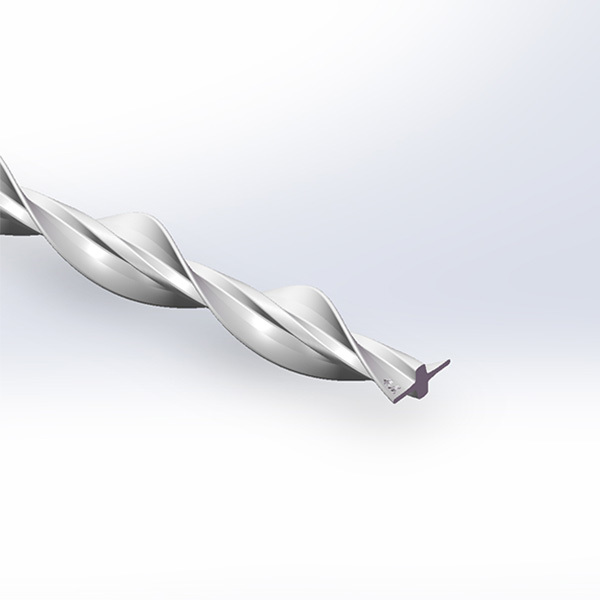
Three core drivers explain the global expansion of stainless steel spiral anchors from Europe. First, performance match: V-shaped profiled cross-sections provide superior mechanical interlock compared to traditional round rods, while stainless steel substrate ensures long service life, aligning with historic building repair's "one-time repair, long-term use" requirement. Second, price advantage: with the maturity of China's stainless steel profiled material industry, domestic spiral anchor pricing is approximately 30 to 50 percent lower than European brands, significantly lowering adoption thresholds in emerging markets. Third, supporting services: domestic manufacturers can customize cross-section specifications, lengths, and packaging per drawing requirements, providing full-chain services from design to installation guidance that shorten localization adaptation cycles in importing countries.
5. Future Outlook: Technical Standards and Regional Coordination
Industry analysis suggests that the penetration pace of stainless steel spiral anchors in international markets will depend on three factors: first, further breakthroughs by Chinese enterprises in European and American certification systems such as ETA and CE; second, the acceptance level of spiral anchor technology in local building repair design regulations in emerging markets; third, the cumulative spread of international demonstration projects. Looking ahead, as low-carbon renovation of existing buildings becomes a global consensus, this minimally invasive, long-life, quantifiable reinforcement technology is expected to spread further to more countries, becoming one of the internationally accepted solutions in the aging masonry repair field.
More news



Contact Us
E-mail:
Wechat:+8613365215016
WhatsApp: +8613365215016
Address:B3-01, Zhangguo Town Science and Technology Park, Xinghua City, Taizhou City, Jiangsu Province
Copyright:Innovate Wirerod (Taizhou) New Materials Co., Ltd.

Message