
Stainless Steel Profiled Spiral Anchors Accelerate Adoption for Minimally Invasive Building Repair
Release time:
2026-07-10
Stainless Steel Profiled Spiral Anchors Accelerate Adoption for Minimally Invasive Building Repair
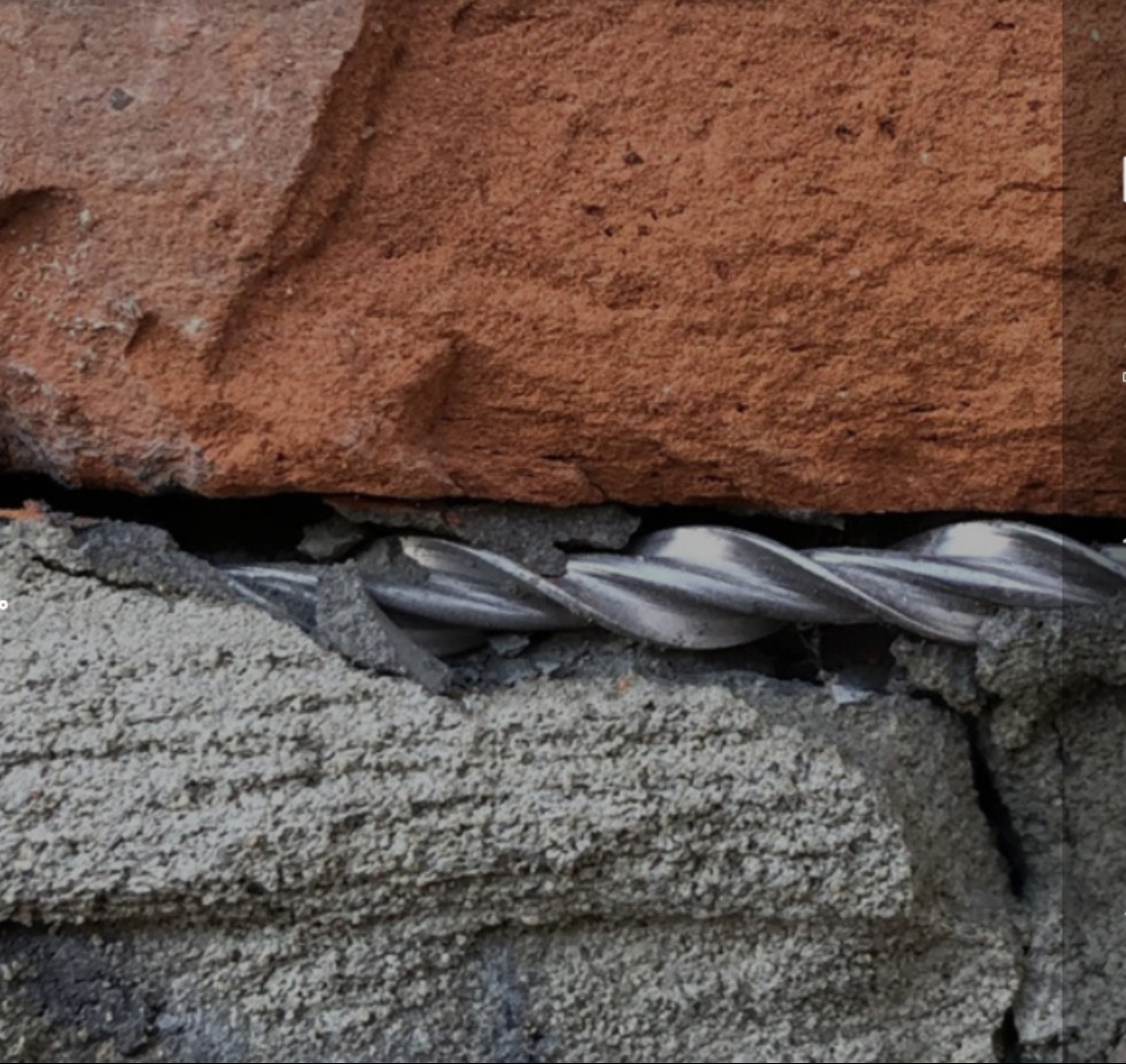
Wall cracking, exterior hollowing, and masonry displacement in aging buildings have long challenged the construction repair industry. Traditional solutions require large-scale facade removal with lengthy construction cycles and high costs, causing irreversible damage to original building aesthetics. A recently introduced wall reinforcement system based on stainless steel profiled spiral anchors, featuring "minimally invasive construction, zero structural damage, and invisible reinforcement," is rapidly gaining traction in cultural heritage repair and residential renovation sectors.
Technical Principle: Spiral Profiled Material Achieves Internal Wall Bonding
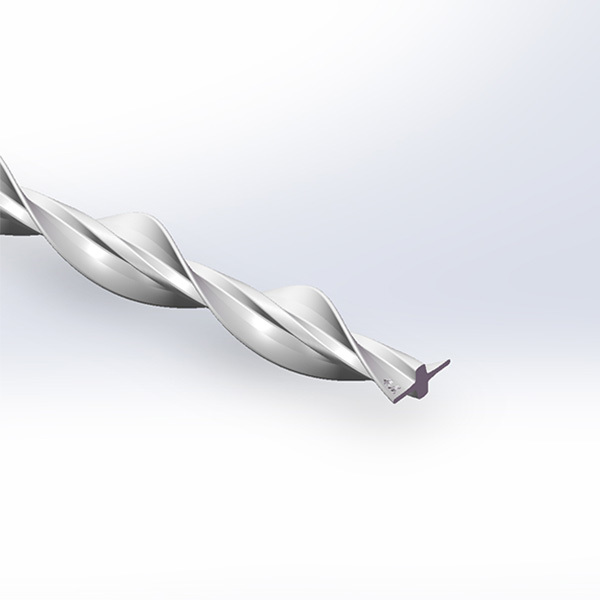
The core material is a customized stainless steel profiled rod manufactured using cold-twist integrated forming to create continuous spiral thread geometry. The spiral凹凸 profiled surface interlocks mechanically with specialized grouting mortar, achieving tensile strength up to 1100N/mm². Base material uses 304 and 316L stainless steel with no risk of corrosion when embedded in mortar joints long-term. Specifications cover 6mm, 8mm, and 10mm diameters with field cutting capability, adaptable to red brick, blue brick, aerated blocks, and stone substrates.
Industry technical experts describe the product as an "internal wall stitching anchor"—using the spiral profile interlocking structure to bond cracked masonry left-right and top-bottom into an integral whole, mechanically preventing further crack propagation from the structural level, distinctly different from traditional surface filling approaches.
Construction Process: Shallow Groove Along Mortar Joint, No Damage to Main Structure
Compared with traditional reinforcement (chiseling large wall areas for rebar mesh or installing external steel supports), the process follows three steps: cutting only shallow grooves approximately 1cm deep along mortar joints without breaking bricks or hollowing the main wall body; cleaning groove dust and injecting structural grout before embedding stainless steel spiral anchors with both ends extending beyond the crack by over 50cm for cross-region bonding; filling grooves with color-matched mortar after grout solidification to restore original facade appearance.
According to publicly available project data, a century-old Lingnan residence in Guangzhou with large-area diagonal cracks in blue brick walls would have required full wall demolition and destruction of historic water-ground bricks under traditional approaches, with estimated construction period exceeding 30 days. Using the stainless steel spiral anchor minimally invasive repair technology completed all reinforcement in 3 days, preserving all original decorations. Third-party structural testing showed post-repair wall crack resistance improved by over 60%.
Application Scenarios: Coverage for Both Residential Renovation and Cultural Heritage
Based on publicly available technical documentation, application scenarios primarily include: residential buildings with wall cracks from foundation settlement and temperature deformation, exterior tile hollowing and balcony wall displacement; historic buildings with strict "repair as old" requirements including ancient blue brick residences, ancestral halls, and temple stone walls; and commercial buildings with storefront stone detachment or filler wall and beam-column connection cracking, enabling shortened downtime without affecting normal operations.
Market Trends: Domestic Products Priced 40% Lower Than Imports, Progressively Replacing Foreign Equivalents
Building reinforcement industry research indicates the previous wall reinforcement market was dominated by ordinary threaded steel and galvanized steel, with hidden risks of rust expansion causing secondary wall damage; carbon fiber cloth solutions only provide surface reinforcement, unable to address internal masonry bonding failure from a structural perspective. Stainless steel spiral profiled anchors, with their three-pronged characteristics of corrosion resistance, high toughness, and minimally invasive construction, are viewed as representative products matching the "minimal intervention" repair philosophy.
Multiple domestic stainless steel profiled material manufacturers now possess mass production capability for such spiral anchors, with ability to customize diamond embossed patterns, spiral thread patterns, and various profile surfaces. Compared with imported equivalents, domestic products are priced approximately 40% lower with supply cycles shortened by approximately 70%, having achieved large-scale implementation in old house renovation and heritage building protection projects across Jiangsu, Zhejiang, Guangxi, and Guangdong regions. Industry analysis notes that as existing building renovation initiatives accelerate, this technology's penetration rate in the building repair market is expected to grow sustainably.
More news



Contact Us
E-mail:
Wechat:+8613365215016
WhatsApp: +8613365215016
Address:B3-01, Zhangguo Town Science and Technology Park, Xinghua City, Taizhou City, Jiangsu Province
Copyright:Innovate Wirerod (Taizhou) New Materials Co., Ltd.

Message