
Stainless Steel Spiral Anchors See Structural Demand Growth in Middle East and European Heritage Building Renovation Markets
Release time:
2026-07-22
Stainless Steel Spiral Anchors See Structural Demand Growth in Middle East and European Heritage Building Renovation Markets
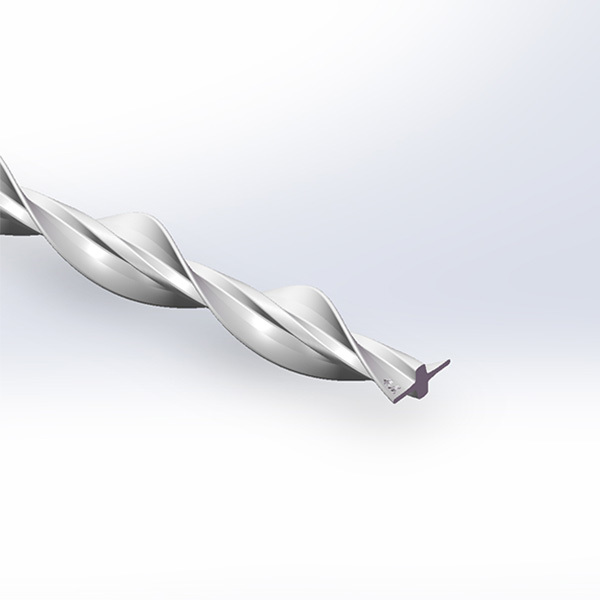
As Gulf states push historic building restoration programs and European heritage conservation projects gain pace, stainless steel spiral anchors — a core consumable for minimally invasive foundation reinforcement — are entering a new demand cycle. Differentiated from traditional structural reinforcement methods such as auxiliary steel supports, the combined advantages of high efficiency, reversibility, and corrosion resistance exhibited by spiral anchors in grouting, stone masonry anchoring, and historic brick wall crack repair applications are driving continuous penetration gains in Middle Eastern and European heritage building renovation projects.
Middle East: Desert Climate Drives New Demand for Corrosion-Resistant Anchoring Materials
Historic buildings in Gulf states are predominantly constructed of stone masonry or adobe, and frequent wind erosion and humidity shifts in sandy-soil environments mean traditional rebar reinforcement components tend to oxidize and expand within 5–8 years, causing secondary wall damage. In heritage district renovation projects recently launched in Saudi Arabia and the UAE, usage of 316L, 904L, and other high-corrosion-resistance stainless steel spiral anchors is rising significantly.
The spiral anchors adopted in the Dubai Al Fahidi Historic District renovation project deliver pull-out bearing capacities of 1.5–2.5 kN per square centimeter, while construction can be completed without damaging the original stone masonry. Post-restoration structural reversibility facilitates subsequent maintenance and adjustment, aligning closely with the heritage conservation principle of "minimal intervention."
Europe: Low-Carbon Restoration Philosophy Drives Standards Upgrade
The European heritage building conservation market has long accounted for over 40% of global share, and Italy, the United Kingdom, and France have in recent years been intensively issuing low-carbon restoration technical guidelines requiring priority use of long-lifecycle, recyclable, low-environmental-load metal consumables in structural reinforcement.
According to a reinforcement project disclosure in Rome's historic center, traditional carbon steel anchor bolts require 2–3 replacements during their service cycle, while 316 stainless steel spiral anchors can remain maintenance-free over a 50-year service cycle — a clear advantage in total lifecycle cost comparisons. Meanwhile, the EU Construction Products Regulation (CPR) has tightened CE certification and CRB technical documentation requirements for anchoring products, making anchor capability with EU ETA certification and EAD 200108 standards more competitively advantageous.
Domestic Manufacturers Accelerate Alignment with International Certification Systems
While overseas markets expand rapidly, leading domestic stainless steel spiral anchor manufacturers are accelerating alignment with international technical specifications. Multiple manufacturers in the Dainan and Wenzhou production hubs report that certification investment specifically targeting Middle Eastern and European markets has grown by more than 50% over the past two years, with some enterprises achieving CE and ETA certifications and seeing year-on-year export order growth to the EU of more than 30%.
Industry analysts observe that demand growth for stainless steel spiral anchors in heritage building renovation is fundamentally a convergence between the global heritage conservation philosophy of "minimal intervention, reversibility, longevity" and the product technology upgrade trend — manufacturers with international technical qualifications and high-end customization capability will continue to benefit over the second half of 2026 and beyond.
More news



Contact Us
E-mail:
Wechat:+8613365215016
WhatsApp: +8613365215016
Address:B3-01, Zhangguo Town Science and Technology Park, Xinghua City, Taizhou City, Jiangsu Province
Copyright:Innovate Wirerod (Taizhou) New Materials Co., Ltd.

Message